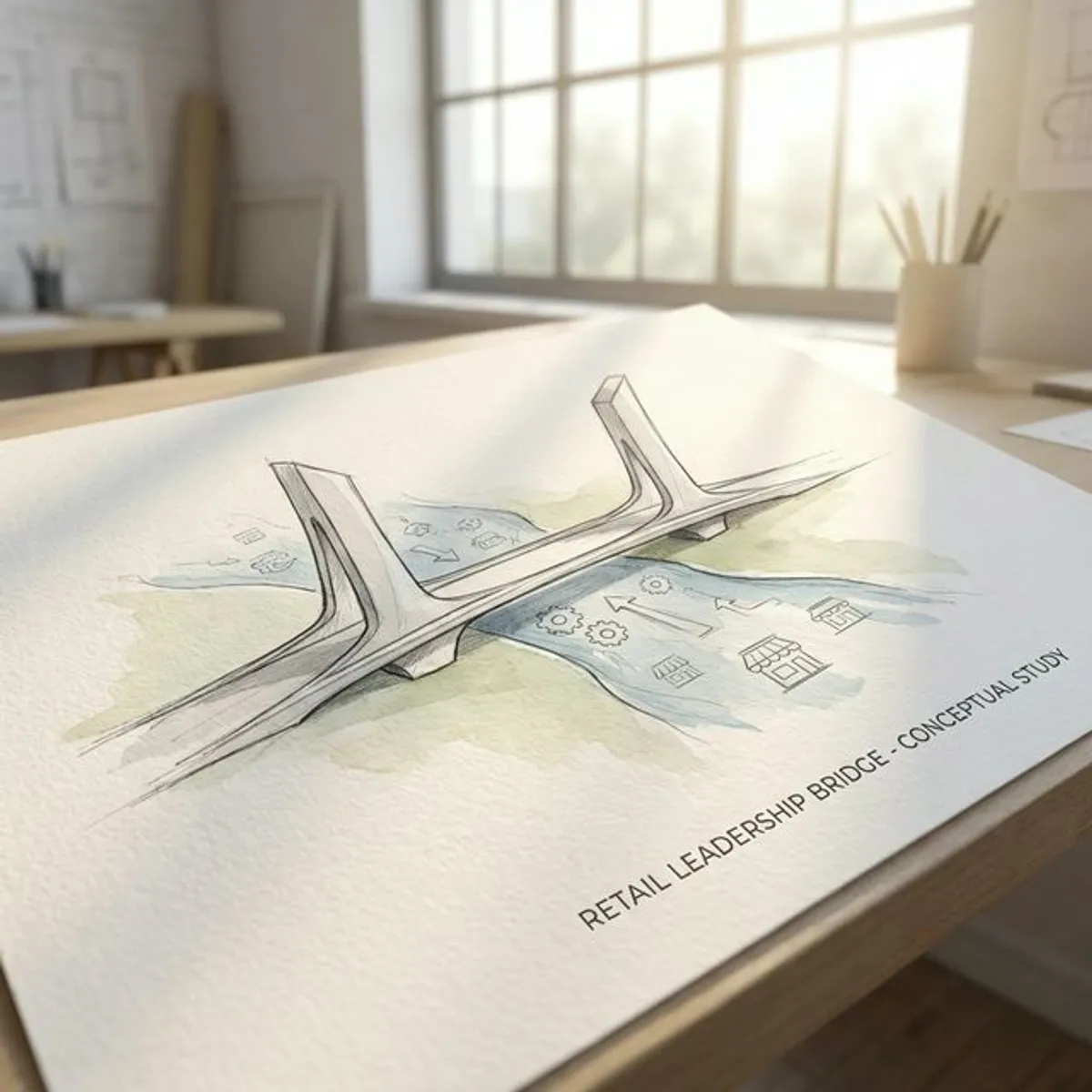
Why high-performing leaders stop constantly reacting and start designing
One of the biggest shifts I see in high-performing leaders is this:
They stop being purely task-driven and start thinking in terms of sustainability and the bigger picture.
The difference isn’t effort. It’s how they think.
Reactive leadership vs strategic leadership
Reactive leaders are often highly capable and deeply committed.
They:
- Chase throughput
- Solve fires as they arise
- Step in to fix problems themselves
- Keep things moving at all costs
In the short term, this looks productive.
But over time, it creates a trap.
Strategic leaders ask a different question:
“Why is this task taking so much energy in the first place?”
And instead of fixing the same issue again and again, they tweak the system so the problem doesn’t keep coming back. In some of the world’s most successful retailers, thinking efficiently becomes a state of mind where better never stops.
That’s the architecture of leadership. It’s the same distinction I unpack in Are You Always Busy — or Actually Effective? — busyness and effectiveness are not the same thing.
Why constant reactivity is so draining
Here’s the catch: constant reactivity depletes your brain.
Psychologists refer to this as hyperbolic discounting—the tendency to prioritise short-term, immediate wins over longer-term, higher-value outcomes. [Harvard Business Review; American Psychological Association]
In leadership terms, it means:
- Today’s urgent problem always wins
- Strategic thinking gets postponed
- Decision fatigue increases
- Long-term prevention never quite happens
In other words:
The busier you are fixing today’s problems, the less capable you become of preventing tomorrow’s.
Decision fatigue and leadership effectiveness
Research shows that decision fatigue reduces:
- Cognitive flexibility
- Quality of judgement
- Willingness to think creatively
Under constant pressure, leaders default to familiar patterns, even when those patterns are no longer effective. [Harvard Business Review; McKinsey & Company]
This is why many experienced leaders feel:
- Busy but not effective
- Productive but not strategic
- Responsible for everything, yet unable to step back
How coaching changes the equation
This is where leadership coaching for retail operations becomes transformational. Not as a “fix”, but as a design tool.
Coaching creates:
- White space to break decision fatigue
- Room to think strategically, not just react
- A pause between stimulus and response
Studies show that leadership coaching significantly increases the transfer of learning. While training alone may lead to modest behaviour change, coaching alongside development programmes has been shown to increase application rates from around 20–25% to as high as 80–90%. [International Coaching Federation; CIPD]
The return on investment of leadership coaching
Organisations that invest in leadership coaching often report:
- Improved decision-making
- Higher engagement
- Better performance outcomes
Multiple studies report ROI figures of 5x or more when leadership coaching is applied effectively, particularly at senior and operational leadership levels. [ICF; PwC]
The value doesn’t come from working harder—it comes from thinking better.
Applying this to retail leadership
These insights are especially relevant in retail, where leaders face:
- Supply chain volatility
- Staffing shortages and turnover
- Relentless operational pressure
- Constant demand for short-term results
The leaders who thrive in this environment aren’t just working harder.
They have:
- Designed better systems
- Built clearer decision filters
- Created space to stay strategic even under pressure
They understand that sustainable performance is designed, not improvised.
A question worth asking
So ask yourself:
Are you:
- Just solving today’s fires?
Or are you:
- Designing tomorrow’s system to prevent them?
That question sits at the heart of the architecture of leadership.
The bottom line
High-performing leadership isn’t about heroic effort.
It’s about:
- Reducing unnecessary complexity
- Protecting thinking space
- Designing systems that support people and performance
When leaders move from reactivity to design, they don’t just feel less overwhelmed—they become significantly more effective.
That’s when leadership becomes sustainable.
References
-
Harvard Business Review – Decision Fatigue, Strategy & Leadership
https://hbr.org -
American Psychological Association – Decision-Making & Cognitive Load
https://www.apa.org -
McKinsey & Company – Leadership Effectiveness & Strategic Thinking
https://www.mckinsey.com -
CIPD – Learning Transfer & Leadership Development
https://www.cipd.org -
International Coaching Federation (ICF) – Coaching Impact & ROI
https://coachingfederation.org -
PwC – Leadership, Productivity & ROI
https://www.pwc.com
Your Next Step
If you’re ready to move from reactive firefighting to strategic leadership design, let’s talk.
Book a Free 20-Minute Strategic Leadership Call
We’ll:
- Audit your current leadership patterns
- Identify which systems need redesigning
- Build your 90-day transition from reactive to strategic
Ute Thomas is a former Regional Director at Lidl and ILM Level 7 certified executive coach specializing in burnout prevention and operational resilience for retail leaders.