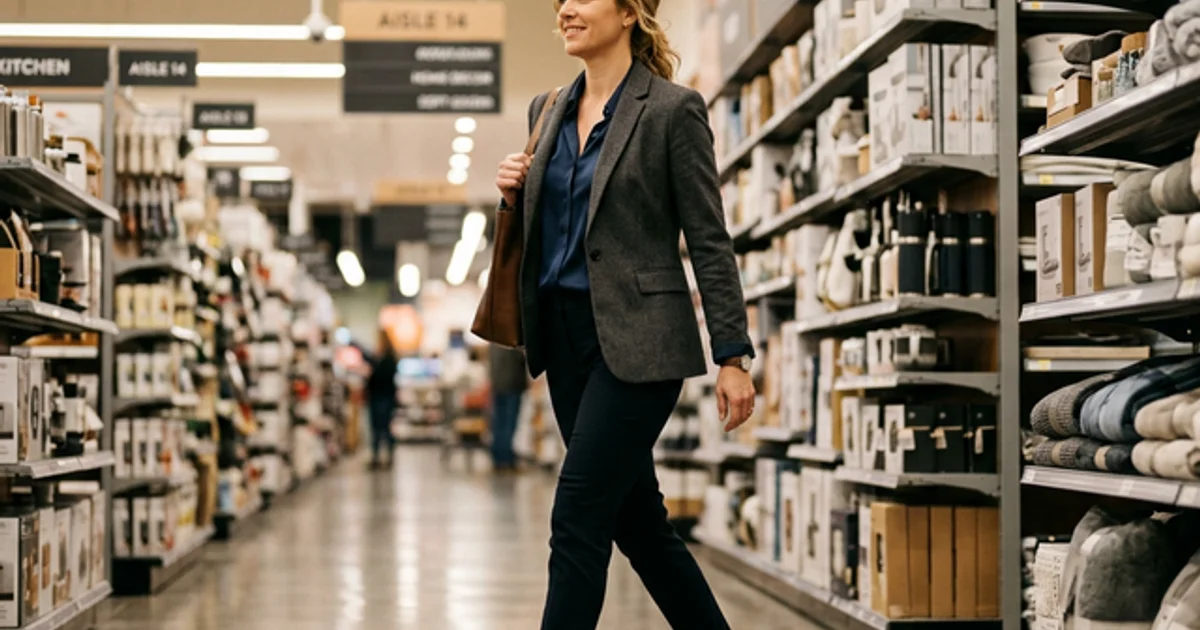
My retail leadership journey began at 24 years old when I landed my first “proper” job as a Trainee Area Manager with Lidl in Scotland.
I still remember vividly the moment I received the phone call offering me the role. The joy and excitement were overwhelming. For the first time in my life, someone was offering me a salary that felt almost unreal — £24,000 a year, nearly double what I had been earning through student jobs.
At the time, I could hardly believe that anyone would value my contribution that highly.
Looking back now, that moment marked the true beginning of my retail leadership journey.
When Leadership Theory Meets the Reality of Retail
Having studied Psychology at university, I believed my academic knowledge would give me a strong foundation for leadership.
Very quickly, however, I realised that the reality of leadership in retail looks very different from academic theory.
Leadership frameworks and models are valuable, but in fast-paced operational environments you rarely have the luxury of analysing a situation and applying the “perfect” theory.
Sometimes leadership simply requires you to act.
There were mornings when no one turned up to open a store. On those occasions I would jump in the car, collect the safe key from whoever had locked up the night before, open the doors for customers, unpack delivery and jump on and off the tills. Luckily I was able to arrange for a security guard to be present so I was not alone in the store.
These situations were rare, but they did happen. And they required quick thinking, calm decision-making and a hands-on leadership approach.
In discount retail, anything can happen. Most of the time it is great fun — but it is also incredibly hard work.
Why Retail Leadership Cannot Depend on One Person
As I progressed into more senior leadership roles, something fundamental had to change.
Early in my career I was naturally very hands-on. When something needed doing, I would step in and solve it.
But as responsibilities grew, it became clear that the success of the operation could not rely on my effort alone.
High-performing retail organisations succeed through strong leaders who develop strong teams. Getting results through people became inevitable.
That meant learning how to create the conditions where people genuinely wanted to follow.
Choosing the Kind of Leader I Wanted to Be
My natural leadership style has always been democratic and empowering. I believe in hearing different perspectives and involving people in decisions.
However, early in my career this was not always the leadership style I saw around me.
Some leaders believed success came solely from their own brilliance. They often had charismatic personalities and surrounded themselves with people who simply carried out their instructions.
But I noticed something important.
The strongest and most capable team members rarely stay silent. They ask questions. They challenge ideas. They contribute their thinking.
And the best leaders actively encourage this because they know the team will perform better for it.
Seeing both leadership styles helped me decide the kind of leader I wanted to become.
The Power of Psychological Safety in High-Performing Retail Teams
Over time I realised that some of the best ideas rarely come from the leader alone. They emerge when people feel safe enough to contribute.
I always tried to ensure that everyone in meetings had a voice — including those who were more introverted or naturally quieter.
Creating psychological safety allows people to speak up, challenge thinking and share ideas openly.
When leaders create this environment, something powerful happens. People begin to think more creatively and contribute solutions they might not have believed they were capable of.
Even today, I am still amazed by how often the most effective ideas come from the team when they are given the trust, space and time to think.
Research consistently shows that teams with high psychological safety outperform those without it — particularly in complex, fast-moving environments. [Google Project Aristotle; Harvard Business Review]
Discovering Coaching as a Leadership Approach
Throughout my retail leadership journey, I naturally adopted what would now be described as a coaching style of leadership.
Helping people grow, develop confidence and exceed their own expectations became one of the most rewarding aspects of my role.
When I turned 40, I gave myself an unusual birthday present — I enrolled in a Master’s degree in High Performance Leadership.
One of the modules focused on coaching, and as part of the programme I experienced being coached myself.
That experience was transformational.
For the first time, I fully understood the value of having someone on the other side of the table who creates space for reflection, asks thoughtful questions and helps you see your own potential more clearly.
At that moment I knew that one day, I wanted to support leaders in the same way.
From Retail Leadership to Executive Coaching
That realisation led me to pursue a second Master’s degree — this time specialising in Executive Coaching and Mentoring.
At the time I had just been promoted to Director level and had two teenage children at home. Studying alongside a demanding leadership role could easily have felt overwhelming.
But because I was genuinely passionate about the subject, it became a source of energy rather than pressure.
I was also fortunate to have a leader who supported and championed my development. His encouragement made a significant difference to both my motivation and my performance.
Supportive leadership like that has a ripple effect — not just professionally, but personally too.
What My Retail Leadership Journey Has Taught Me
After more than two decades in senior retail leadership, one lesson stands out clearly.
Leadership success rarely comes from the leader alone.
It comes from the ability to develop people, build trust and create an environment where individuals feel confident to contribute their thinking.
When leaders create those conditions, teams become stronger, engagement improves and performance follows naturally.
A Message to Emerging Retail Leaders
If you are early in your leadership journey, remember this:
You do not need to have all the answers.
The most effective leaders are not those who speak the most in the room. They are the ones who create the space for others to think, contribute and grow.
Leadership is not about control. It is about enabling the potential that already exists within your team.
And when leaders truly unlock that potential, extraordinary results become possible.
References
-
Google Project Aristotle – Psychological Safety in Teams
https://rework.withgoogle.com -
Harvard Business Review – Leadership, Psychological Safety & Coaching
https://hbr.org -
International Coaching Federation (ICF) – Coaching Effectiveness Research
https://coachingfederation.org -
CIPD – Leadership Development & People Management
https://www.cipd.org
Your Next Step
If my retail leadership journey resonates with you and you are ready to develop your own leadership approach, let’s talk.
Book a Free 20-Minute Leadership Strategy Call
We’ll:
- Understand where you are in your own leadership journey
- Identify what is holding you back from leading at your best
- Create a clear plan to develop the leadership style your team deserves
Ute Thomas is a former Regional Director at Lidl and ILM Level 7 certified executive coach specialising in retail leadership development, psychological safety and executive coaching.